
Author: Construction Solution Ideas

  • Understanding Construction Contract Agreements: A Beginner’s Guide

    Understanding Construction Contract Agreements: A Beginner’s Guide

    We all see some type of construction in our daily life. And, most of us have been involved in construction work. Whether doing fence masonry; painting of family house; construction of building/bridge; or a big dam; these all fall in into construction category with of course wide range of complexity.

    It should be interesting to note that the words we use in complex construction works are very similar to simple constructions. For example, masonry -> masonry; concrete -> concrete; roof -> roof; and contract agreement –> contract agreement.

    In this article, we shall discuss construction contract agreement briefly and why it is very important to your construction work. Finally, you shall be able to draft an agreement for your construction project.

    What is construction contract agreement?

    A construction contract agreement is a written understanding between two parties to build or construct a civil engineering or related work. Now, who are these two parties? Look at the following pictures.

    Relation ShipParty 1
    (Owner)
    Party 2
    (Consultant or Contractor)
    1Individual (like Abebe, Chaltu)Individual (like Teshome, Almaz)
    2Individual (like Abebe, Chaltu)Company (AGY Consultant or Extreme General Contractors)
    3Private Business (ZTY Supermarket)Individual (like Teshome, Almaz)
    4Private Business (ZTY Supermarket)Private Business (ZTY Supermarket)
    5Government Organization (AA Housing)Individual (like Teshome, Almaz)
    6Government Organization (AA Housing)Private Business (ZTY Supermarket)

    As can be seen above, the first party (Owner/Client) want to build something while the second party will be the builder (Contractor). When these two parties agree and sign a piece of paper for a construction work, they have formed or committed a construction contract agreement.

    What are the benefits of a construction agreement?

    Construction in general is a complex undertaking. It involves two or more people to complete a project. Having written and signed contract documents shall have the following benefits

    • It clearly explains what work will be done, who is responsible for what, how long the project will take, and how much it will cost
    • It serves as a legal document for both the owner and the contractor
    • If something goes wrong or there’s a disagreement, the contract can be used to solve the problem fairly
    • It makes sure payments are made properly and on time, and it can include penalties for late work or rewards for finishing early
    • It also helps the project run smoothly by setting clear deadlines and steps to follow

    Can I prepare a construction contract agreement for my project?

    In order to give you an answer, we first need to classify your project into one of the following complexity categories.

    project complexity categories illustration

    EASY: This is a type of construction where one or two skilled-manpower (mason, electrician, plumber, etc.) are involved. House paintings, ditch construction, fence construction, house maintenance, and so on are examples of easy construction. In this case, you may assign yourself as owner and project manager even if you don’t have experience in construction.

    SMALL: House renovation/maintenance; residence villa/building; small internal road; and small bridge constructions can be included into this group.  These construction works involve more than two skilled-men power with professionals. In this case, you may assign yourself as owner and project manager but you definitely need an experienced professional adviser. It may also be wise to assign a professional as project manager.

    MEDIUM: These are projects with wide scope compared to small projects. Medium rise buildings (five to twelve stories), small factories, medium span bridges, small dams, and so on fall into this category. These projects require dedicated individual professionals and companies to manage, supervise, and construct. It is highly recommended for the owner not to be a project manager. A qualified professional or company shall manage these projects.

    BIG: From medium to high-rise buildings (more than twelve stories) to highways to bridges to dams; all shall fall under this category. These projects are highly complex and difficult to manage/construct in which competent companies with specialized experience are required.

    How shall I draft my construction contract agreement?

    Based on the above complexity categories, you shall prepare a contract document for easy projects only. We have prepared a step by step guide for you on our article “how to draft a simple construction contract agreement”. You can also draft an agreement together with a professional for a small project too. Please read our guide on our article “how to prepare a formal construction contract agreement”. For medium and big projects, it is highly recommended to hire professional companies on this matter.

    In conclusion,

    A good construction contract isn’t just legal protection—it’s peace of mind. For owners, contracts provide quality guarantees and remedies if things go wrong. For contractors, they ensure fair payment terms and clear work expectations.

    Share your ideas with our community via the comment box below.

    OR
  • Why Buildings and Bridges Collapse: Top 10 Reasons You Should Know

    Why Buildings and Bridges Collapse: Top 10 Reasons You Should Know

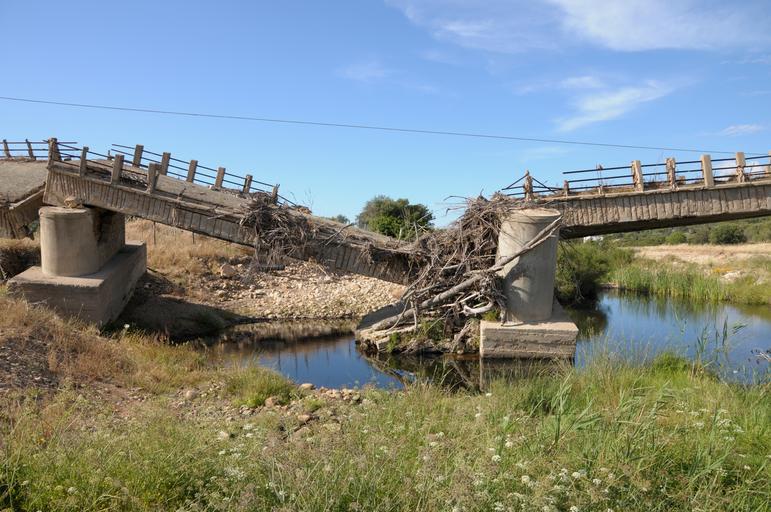
    It is a very common way for people to think that a building or a bridge to be safe and stable as long as it has the usual slick and attractive looks. This assumption can be wrong if these structures are not designed and built as per the industry standards. So, why do buildings and bridges fail? Here are top ten lists

    READ HELPFUL BOOKS ON THIS TOPIC

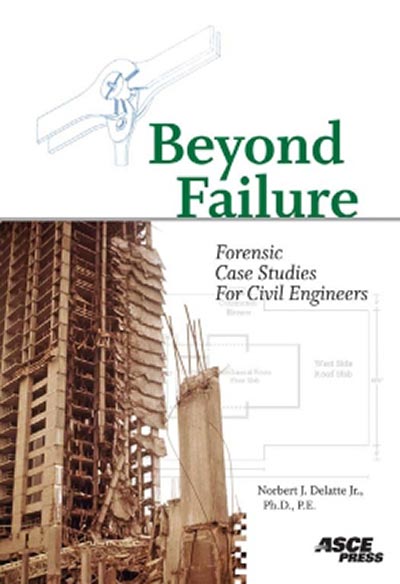
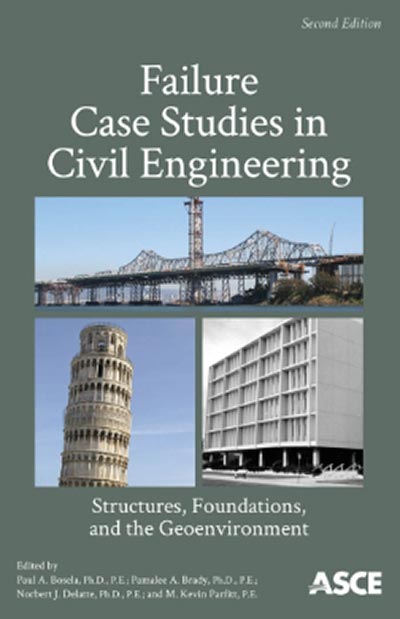
    Failure Case Studies in Civil Engineering: Structures, Foundations, and the Geoenvironment
    By ASCE

    The book compiles 50 real-world engineering failures, analyzing causes such as design flaws, construction errors, and unexpected conditions, while highlighting the lessons learned. The book is widely valued as a teaching resource for linking theory to practice, helping students and professionals understand how failures occur and how to prevent them in future projects.

    More Books

    Why Buildings Fall Down: How Structures Fail
    By Matthys Levy & Mario Salvadori

    The book explores the many ways in which structures collapse, using historical and modern case studies. It covers failures due to natural forces (earthquakes, wind, soil settlement), design or material flaws, overloading, fatigue, and lack of redundancy. The book mixes technical explanations (in accessible terms) with real disasters—like bridge collapses, failed dams, and building walkways—and offers lessons on how engineering, regulation, and maintenance can help prevent future catastrophes.

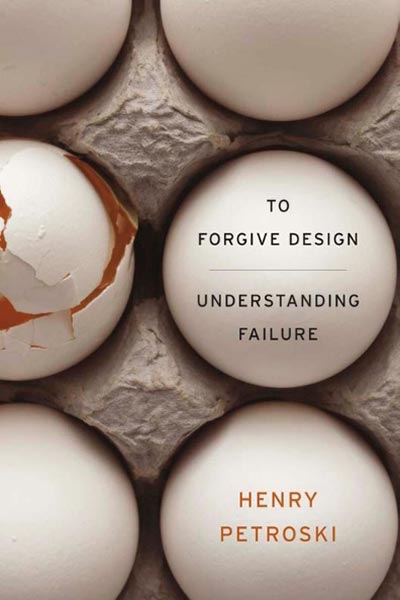
    To Forgive Design: Understanding Failure
    By Henry Petroski

    The book examines how engineering failures happen—not just because of design errors, but due to a complex mix of human, social, economic, and cultural factors. He reviews famous disasters—from bridge collapses and oil spills to structural collapses—and shows how failing to anticipate failure, or admitting risk, often worsens outcomes. Ultimately, the book argues that understanding and owning up to failure is essential: failures teach lessons that lead to safer, more thoughtful design.

    Failure Mechanisms in Building Construction
    By ASCE

    The book investigates how and why buildings fail, breaking down a wide variety of failure types, their root causes, and how they can be diagnosed. It contains many case studies (shelf-angles, glazing leaks, masonry/plank issues, frame shortening, etc.) showing the symptoms, technical causes, and identifying characteristics of each failure type. It also includes guidance on how to conduct forensic investigations—fieldwork, lab testing, report writing, and even expert testimony—and ends with an annotated bibliography and index of failure mechanisms.

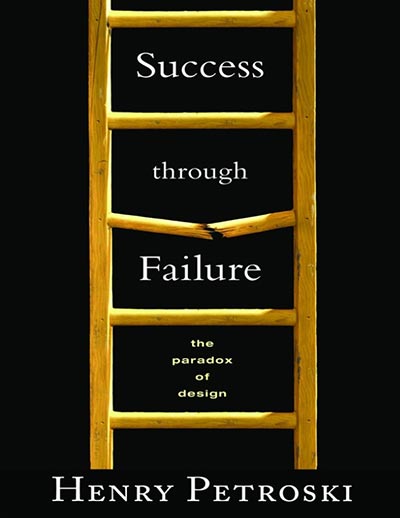
    Success Through Failure: The Paradox of Design
    By Henry Petroski

    The book shows how failures drive innovation, arguing that studying design breakdowns—from bridges to space shuttles—reveals weaknesses, informs improvements, and ultimately makes engineering safer and more successful.

    1. Structural Failure

    Buildings and bridges are designed to carry loads from people, animals, vehicles, wind and so on. These loads are transferred to the ground using structural elements (like slab, beam, column, girder, etc.). Structural failure occurs when the design or arrangement of these elements cannot withstand the applied forces. Any design or construction error/problem in these elements will lead to failure of part or all of the structure.

    Example

    The Tacoma Narrows Bridge (USA, 1940) — nicknamed “Galloping Gertie”, it collapsed due to aeroelastic flutter, a structural failure caused by wind vibrations not considered in the design.

    2. Foundation Failure

    buildings and bridges stand on the ground. Simply stated, this ground need to be stable and firm to carry load from these structures. A foundation is a structural element which transfers load from the structure to the ground. Poor site investigations, bad design/construction of foundation, unstable ground, or settlement means sinking or falling down of building/bridge. Famous failures often trace back to weak or inadequate foundations.

    Example

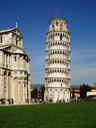
    Leaning Tower of Pisa (Italy) — although still standing, it tilted due to weak, unstable soil beneath its foundation. In worse cases, entire buildings sink or crack.

    3. Construction Material

    Construction of buildings and bridges involves different material types with huge quantities. Examples of these material types are wood, steel, concrete, masonry, bricks, etc. The quality of these materials is directly related to their strength and their load carrying capacity. If sub-standard or poor quality material is used, failure is eminent. The structural failure will be critical in case this material is used in structural elements like building columns and bridge girders/piers. Even when designs are correct, the use of poor materials compromises performance, leading to cracking, spalling, or eventual collapse.

    Example

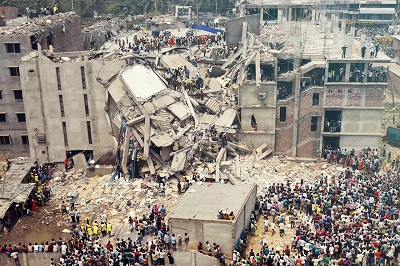
    Rana Plaza Collapse (Bangladesh, 2013) — substandard concrete and steel were used in addition to illegal building extensions, leading to a catastrophic collapse that killed over 1,100 people.

    4. Loading

    In designing buildings and bridges, the type and magnitude of loads are computed using industry standards. Any major deviation from this calculated loads or types will incur unexpected forces on structure elements which could lead to disastrous failures. Failure occurs when actual loads exceed the design capacity due to overcrowding, excessive storage, or unexpected use.

    Example

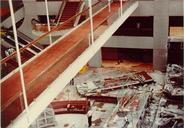
    Hyatt Regency Walkway Collapse (USA, 1981) — an improperly designed connection detail couldn’t withstand the weight of hundreds of people gathered during a dance event, killing 114 people.

    5. Fatigue and Wearing

    Fatigue and wearing is a process in which a material losses part of its initial quality through repetitive loading, vibrations, or temperature variations. In this case, proper inspection and maintenance need to be done which otherwise lead to permanent failure.

    Example

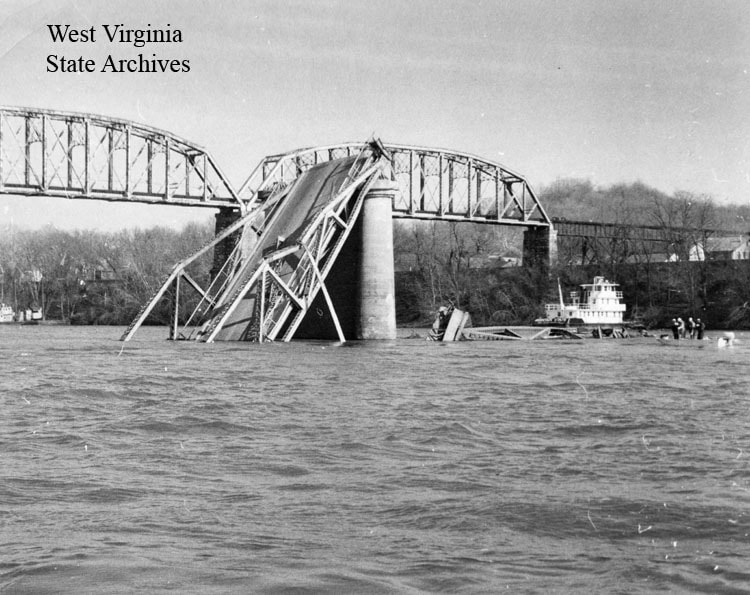
    Silver Bridge Collapse (USA, 1967) — the suspension bridge fell due to metal fatigue in a single eye bar link, causing 46 fatalities.

    6. Construction Workmanship

    Construction workmanship refers to man power skill, use of equipment, procedure and safety standards. Improper concrete mixing, weak welds, misaligned reinforcements, shortcuts during execution, and lack of supervision are common issues. Human error and negligence during construction directly translate to structural weakness and long-term risks.

    Example

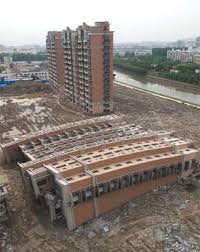
    Lotus Riverside Apartment (China, 2009) — a 13-story building toppled after improper excavation weakened its base.

    7. Natural Disaster

    Earthquakes, volcanoes, floods, landslides, etc. account for natural disasters. The forces from these natural phenomena are enormous for buildings and bridges to bear. But, the design of buildings and bridges need to consider these forces to some extent. This consideration will make evacuation and lifesaving work possible in case of disaster.

    Example

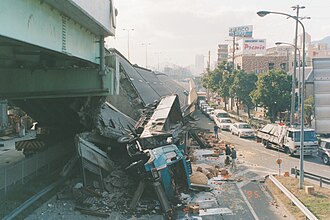
    Kobe Earthquake (Japan, 1995) — thousands of buildings and bridges collapsed because older structures weren’t designed to resist strong seismic activity.

    8. External Forces

    Erosion, scour, chemical degradation, etc. are preventable forces which damage buildings and bridges. Proper investigation at design stage and monitoring during service will alleviate the damage from these forces.

    Example

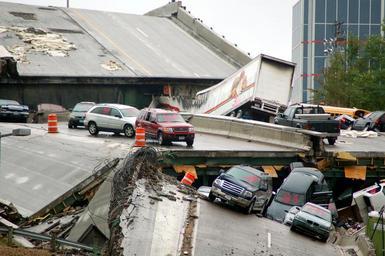
    I-35W Mississippi River Bridge (USA, 2007) — collapsed during rush hour, partly due to design flaws but worsened by external stresses, including construction loads.

    9. Construction Planning

    Poor planning—such as inadequate site surveys, weak logistics, rushed schedules, and lack of coordination—creates hidden risks. If planning fails to account for timelines, resources, or site constraints, quality often suffers. Poor planning may also mean critical tests and inspections are skipped, increasing chances of failure. These invisible crucial planning problems will integrate with above failure causes to bring down buildings and bridges to the ground. Read our article on this subject: Construction Planning for Owners and Project Managers.

    Example

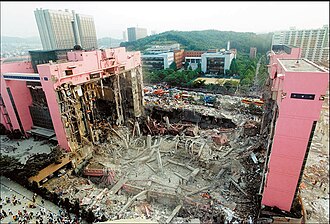
    Sampoong Department Store (South Korea, 1995) — unauthorized design changes and poor planning led to one of the deadliest building collapses in history, killing over 500 people.

    10. Construction Management

    Even with a strong design and plan, weak management can bring failure. Lack of supervision, poor communication among teams, ignoring safety protocols, and cost-cutting measures all compromise project integrity. Effective project management ensures quality control, proper sequencing, inspections, and adherence to design standards—its absence invites disaster.

    Example

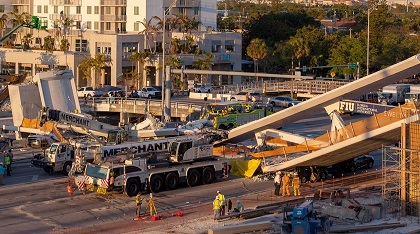
    FIU Pedestrian Bridge (USA, 2018) — warnings were ignored and oversight was weak, leading to collapse just days after installation, killing six.

    Conclusion

    Every building and bridge failure tells a story—not only of broken concrete and twisted steel but also of human oversight, negligence, or lack of preparation. By studying these causes, engineers, managers, and stakeholders can prevent history from repeating itself. Strong design, quality materials, skilled workmanship, proper planning, and robust management together create structures that truly stand the test of time.

    Share your ideas with our community via the comment box below.

    OR
  • Exploring Civil Engineering Study Areas: Structural, Geotechnical, Transportation, and More

    Exploring Civil Engineering Study Areas: Structural, Geotechnical, Transportation, and More

    From clean water that we drink everyday; to roads/highway that we travel on; to sweet home house buildings that we dwell, all have the finger prints of civil engineering. Civil engineering as a backbone of civilization through out history. It serves the need of people and communities by designing and building houses, buildings, bridges, railways, tunnels, water treatment plants, pipe lines, and so on.

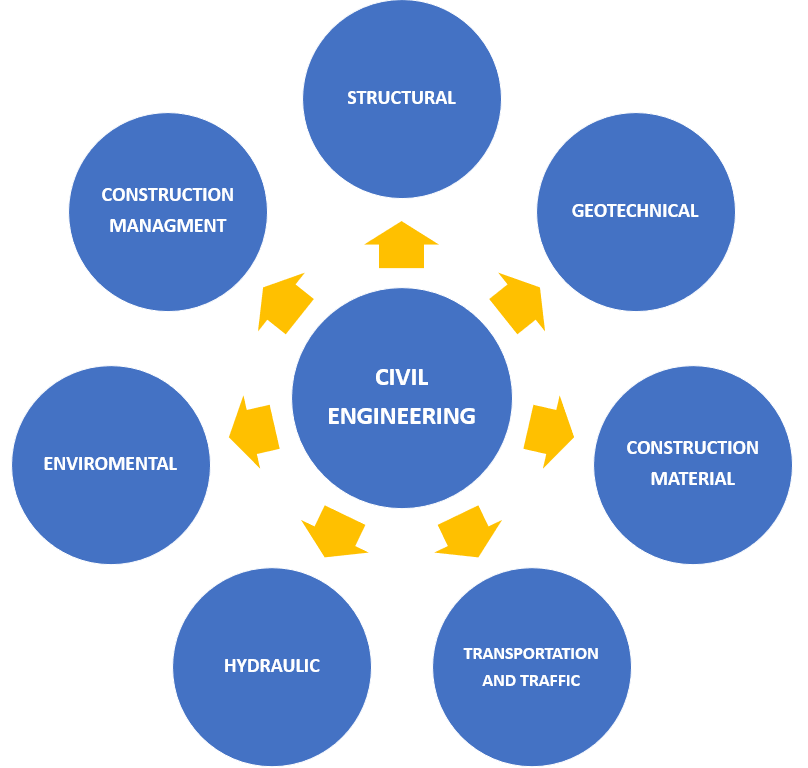
    civil engineering sub-fields

    Civil engineering plans, designs, constructs/builds, monitors, and maintains various structures to benefit society. Civil engineering also studies our surroundings to create safe environment by managing waste and pollution.

    READ HELPFUL BOOKS ON THIS TOPIC

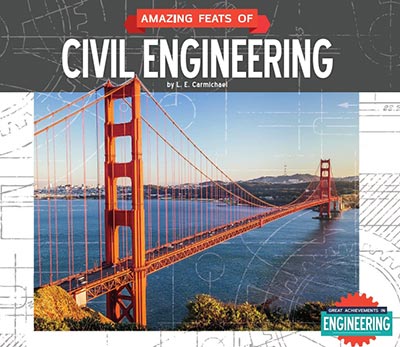
    Amazing Feats of Civil Engineering
    By L. E. Carmichael

    The book highlights the history and role of civil engineers, showcasing iconic projects like bridges, tunnels, and skyscrapers, while inspiring readers with real-world examples and career insights.

    More Books

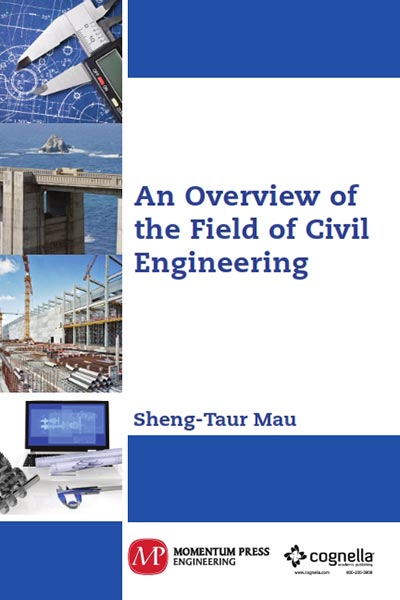
    An Overview of the Field of Civil Engineering
    By Sheng-Taur Mau

    The book introduces the profession, explaining its history, main branches, and the vital role engineers play in designing and maintaining infrastructure.

    Civil Engineering: A Very Short Introduction
    By David Muir Wood

    The book offers a concise look at the field, covering its history, key figures, and essential works like bridges, tunnels, and water systems, while addressing modern challenges of materials, energy, and sustainability.

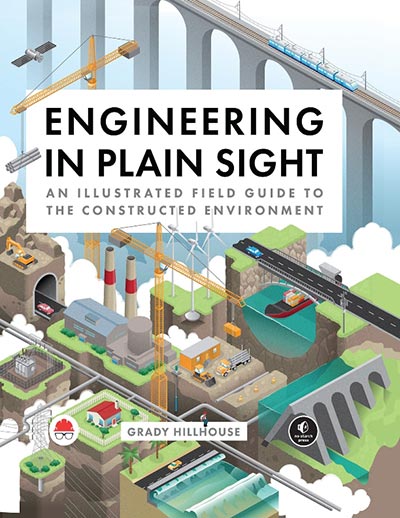
    Engineering in Plain Sight — An Illustrated Field Guide to the Constructed Environment
    By Grady Hillhouse

    The book shows how infrastructure around us works, from power lines and bridges to water systems and tunnels. It uses clear writing, color illustrations, and bite-sized explanations to help non-engineers “see” the built environment with new eyes, spotting everyday engineering details that usually go unnoticed

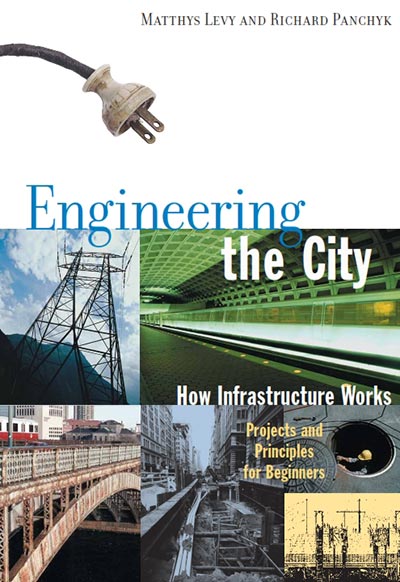
    Engineering the City: How Infrastructure Works (Projects and Principles for Beginners)
    By Matthys Levy & Richard Panchyk

    The book explains how the hidden systems of a city—such as water, electricity, gas, sewers, bridges, roads, and wires—are built and function. It traces how these infrastructures evolved with urban growth, uses diagrams, experiments and games to teach principles, and shows both visible and invisible parts of city engineering.

    The Corniche mixed-use development, three landmark towers, London
    The Corniche mixed-use development, three landmark towers, London

    Structural Engineering

    Structural engineering deals with the forces acting on structures and how these forces are safely transferred to the ground.

    More explanation on structural engineering

    Structural engineering studies forces applied on a structure; how to carry them and properly transfer them to the ground. The forces could come from people, animals, vehicles, wind, earthquake, water, etc.

    In case of buildings, structural engineer receives designs from architectural engineer. Then, he/she analyze and design different parts (beams, columns, shear walls, etc) of the building to carry loads and stand on the ground. Furthermore, structural engineers are also intensively involved in similar tasks on bridges, towers, and other civil engineering structures too. Depending on the type of structure, we name structural engineers as building structural engineer, bridge structural engineers, and so on.

    Geotechnical Engineering

    This field studies the strength and behavior of soil and rock to ensure the ground can safely support structures like buildings, bridges, and dams.

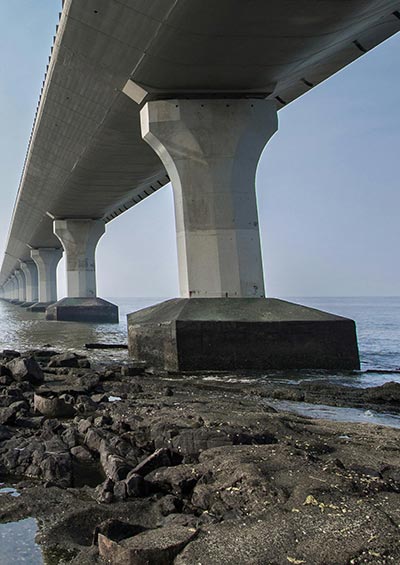
    Bridge pier supported the ground
    Piers of a cable-stayed bridge in Mumbai, India
    More explanation on geotechnical engineering

    Almost all civil engineering structures are placed on natural and/or man-made ground. Geotechnical Engineering studies the load carrying capacity and stability of the ground. This field studies behavior and strength of soil and rocks in the ground.

    Massive structures like sky scrapers, bridges, dams, etc exert a lot of pressure on the ground. This leads to stress and settlement of the ground. If these stress and settlement exceed the allowable limit, the building or bridge can fail or lean. In addition, this field studies landslides and earthquakes.

    Construction Material Engineering

    Construction Materials Engineering focuses on studying materials behavior in the lab and field to set requirements that ensure quality.

    More explanation on construction materials engineering

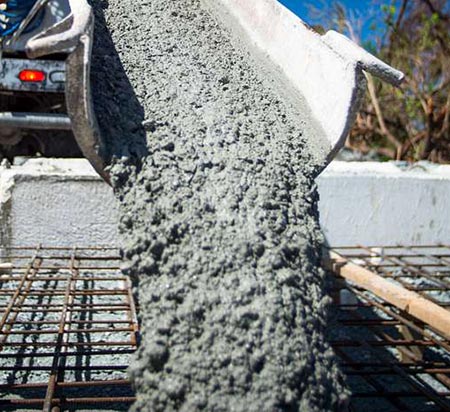
    Construction materials can be defined as items or things used to build or construct civil engineering structures. There are a lot of construction materials like concrete, stone, timber, steel, asphalt, soil, bricks, hollow blocks, aluminum, glasses, plastics, geosynthetics, etc. These materials need to have certain qualities to carry loads and withstand other environmental factors.

    Construction Materials Engineering studies the behavior of these materials both on field and laboratory. It specifies certain requirements to reach planned quality.

    Transportation and Traffic Engineering

    Transportation and traffic engineering involves planning, designing, building, and managing infrastructure to enable efficient transport which is essential for development and progress.

    A complex highway and railway interchange in Moscow, Russia
    More explanation on transportation and traffic engineering

    Transportation can be generally defined as moving or transporting people, commodities, materials, animals, and so on from one place to another. For this purpose, transportation means like carts, vehicles, buses, trucks, trains, airplanes, etc. are required. These transportation means need roads, bridges, railways, and airfields infrastructures to travel and land on.

    Transportation and traffic engineering is planning, designing, building/constructing, managing and maintaining of these infrastructures. Any nation with high development goals should aspire to proper and efficient systems of transport and traffic management.

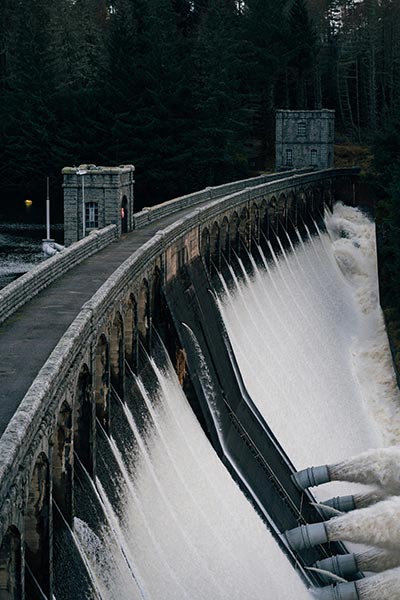
    A mass concrete gravity dam, Laggan Dam, Scottish Highlands

    Hydraulic Engineering

    Hydraulic engineering focuses on studying how water moves and behaves, and it designs systems like dams, canals, and bridges to control, store, and deliver water safely where it is needed.

    More explanation on hydraulic engineering

    All living things require water for survival. However, water is not found everywhere. This means that there is a need to transport water from one place. Hydraulic engineering studies water movement and retention in a given environment.

    Hydraulic Engineering analyzes the force and effect of water movement as a fluid. Hydraulic Engineering develops models for dams, bridges, irrigation canals, bridges, etc so that water can be stored and safely transported to its intended location.

    Environmental Engineering

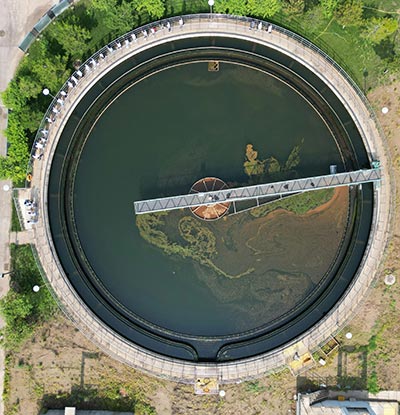
    Environmental engineering deals with protecting the environment and public health through proper design, construction, and management of systems that handle water, air, and waste. Civil engineers in this field work on projects such as clean water supply, wastewater treatment plants, solid waste management, drainage systems, pollution control, and sustainable construction practices.

    More explanation on environmental engineering

    This civil engineering field is drawn from environmental science in which human beings use environment’s resources. Environmental engineering studies, plans, designs, construct plants for the following purposes:

    • Provide clean water to people
    • Waste water treatment
    • Pollution control
    • Garbage collection and disposal

    In general, environmental engineering build treatment plants and prepare disposal areas so that we get clean drinking water and safe environment to live in.

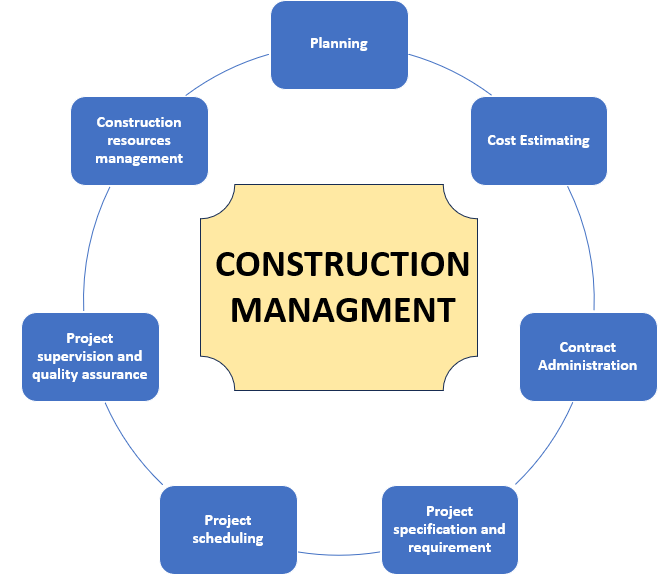
    Construction Management

    Construction management ensures that a project is completed on time, within budget, and according to quality and safety standards. It involves the process of planning, coordinating, and controlling a construction project from start to finish.

    More explanation on construction management

    Most civil engineering fields discussed above are inter-related and involve planning, analyzing, designing and modeling of particular structures. To actually build or construct these structures, construction management is required. Construction management plans, estimates, bids, construct, and maintain all civil engineering structures.

    Construction management starts by studying the needs and requirement of a certain project.

    Summary

    Civil engineering is an integral part of our life in which it builds and/or construct unique structures which enables our daily life safe and easy. Civil engineering provides:

    • Safe and comfortable houses, buildings, offices
    • Fast and smooth roads, bridges, railways, airfields
    • Water for drinking, washing, swimming
    • Waste water treatment for healthy environment
    • Pollution control and waste management
    • Mitigation measures from natural disasters

    To safe guard the above way of life, it is vital to properly study and apply civil engineering. Civil engineering professionals in each specific field shall be employed to undertake projects.  In our next post, we will uncover the disasters that happened in connection to civil engineering.

    Share your ideas with our community via the comment box below.

    OR