Planning to start a G+3 residential building construction, build a small bridge in a village, or set up a warehouse for your factory? At first, projects like these may feel simple. But without a clear agreement, things can quickly slip into confusion, delays, or even disputes. This blog explains the basics of construction contracts for small projects and how to draft one—so you can keep your project running smoothly and build with confidence.
Before diving into this subject, we have covered the importance and types of construction contracts in our articles listed below:
One needs to understand, small projects are as complex and difficult as big projects. The only difference is that small projects can be understood and managed with help of one or two professionals. The following points are very important for people who do not have experience in construction or non-professionals.
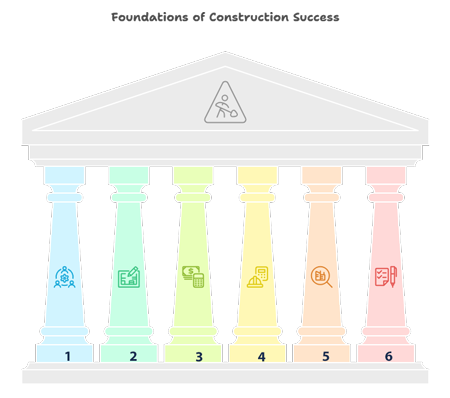
- Teamwork: construction is not one person job!
- Planning: construction needs strategic preparation.
- Budget: construction requires a lot of money.
- Time Management: efficient scheduling and deadlines will determine timely completion.
- Quality Control: construction quality need to be checked and controlled.
- Documentation: construction shall keep accurate records and reports.
This articles assumes planning and design stage of your project is complete and well documented. Before you start construction, you need well drafted and signed construction agreement.
How shall I draft a construction agreement for my project then?
The answer to this question is: You do not draft your agreement unless you are a contract engineer or construction lawyer. You only need to understand the agreement very well since you are going to sign on it. The following sections clarify the different aspects of construction agreements and finally provide templates that can be modified to your need.
Key Parties Involved in Construction Agreements
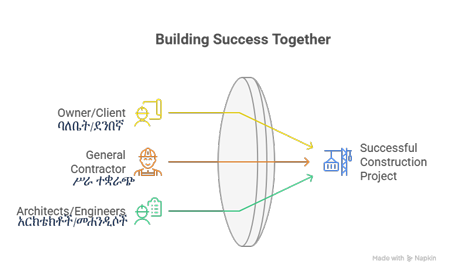
Construction contracts typically bring together several players:
- Owner/Client: The person or organization funding the project
- General Contractor: The primary builder responsible for day-to-day operations
- Architects/Engineers: The design and supervision professionals
Main Types of Construction Contracts
Type of construction contract need to be decided before drafting any contract. The following are the five major construction contracts as explained on our article.
Lumpsum Contract or Fixed Price Contract
Unit Price Contract
Time and Materials Contract
Cost-Plus Contract
Design-Build Contract
Legal Framework Governing Construction Contracts
Construction contracts require legal frame work to exist. They’re shaped by:
- Local building or construction codes
- Industry standards and best practices
- Contract law principles
- Licensing requirements
Different locations have different rules. That’s why having region-specific knowledge is crucial when drafting these agreements.
Key Elements of Your Contract
The following are the key elements of your construction contract which shall be included in the signed document
| Project Details:- Project name and identification reference shall be decided. Specific location of the project site and parties involved (Owner, Contractor, Consultant, and so on) shall be identified. | |
| Scope of Work:- Detail project description of all material, labor, and professional requirement need to presented. Design documents, specifications, and all reports need to be documented. | |
| Duties and Responsibilities: – Who is responsible for what? Obligations and tasks shall be assigned to each party of the contract. | |
| Payment Terms: – the total cost of construction need to be estimated and agreed on; when payments are going to be settled; how much advance and retention; method of payment; and so on. | |
| Project Schedule: – Clear schedule of when the project starts and when it is going to be completed. What if delay occurs and how to extend the completion date. | |
| Change Orders: – How do you manage changes in design or government requirements during construction. How to estimate the cost of the change in construction. | |
| Quality: – A method need to be devised to insure quality of construction. Selecting standards in relation to quality assurance. | |
| Dispute: – A step by step procedure shall be set for handling disagreements and disputes. | |
| Termination: – The construction project could be faced with various challenges which can lead to termination by one party or both. Devising a method to handle this termination is vital. |
The description you prepared can be summarized and constituted into an agreement.
Drafting your Construction Contract Agreement.
There are two options for drafting your contract document
OPTION A
Hire a professional or an expert and provide him with your description of the project as outlined above. He/she will prepare a draft document for you.
OPTION B
You can also get sample templates for an extra fee from this website. These templates are drafted for a residential building, small bridge and internal roads. And, you can modify it with a professional.
Summary
Preparing a carefully drafted contract document for your small project will create big clarity to all parties of the construction. It is also vital to introduce a professional in your project. Well prepared and signed construction contract document on your project will save you from confusion, delays, or disputes which could come through time.
WHAT DO YOU THINK OF THE ABOVE ARTICLE?
Share your ideas with our community via the comment box below.
OR